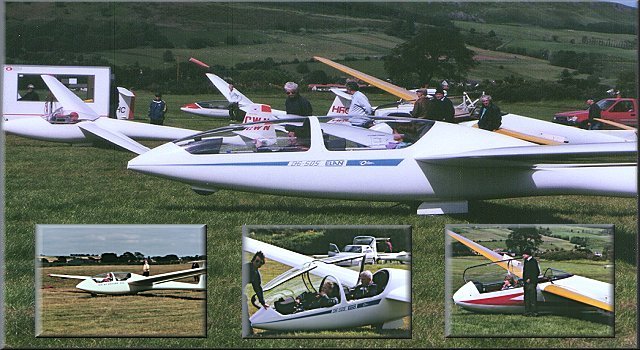
We welcome all aspiring pilots, however please bear in mind when planning your visit that gliding operations are extremely weather-dependent,
and therefore cannot always operate to an exact schedule.
We welcome all aspiring pilots, however please bear in mind when planning your visit that gliding operations are extremely weather-dependent,
and therefore cannot always operate to an exact schedule.
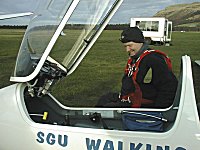 All
pilots need to be medically fit to fly. This basically means not having
any health condition which might cause a problem in the air, for example
a heart condition or proneness to fainting.
All
pilots need to be medically fit to fly. This basically means not having
any health condition which might cause a problem in the air, for example
a heart condition or proneness to fainting.
To fly solo, you will need reasonably good eyesight (If you can pass a driving test you're almost certainly OK) This will need to be certified by your G.P. before you are permitted to fly solo.
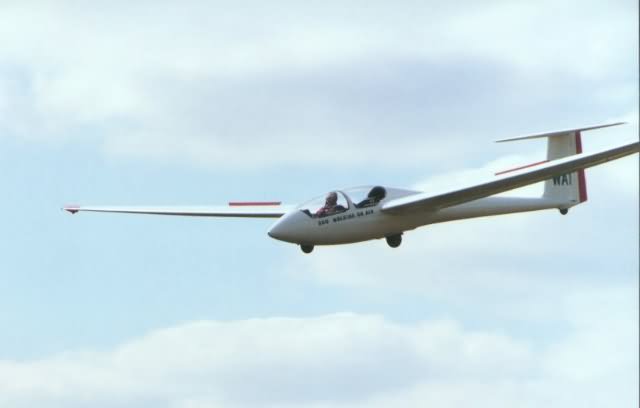
And if you're not sure whether you would like it or not, then
why not just come and watch ? There's no obligation to fly.
-What happens on a Trial Flight?
Firstly, please be well-aware that gliding isn't like turning-up at an airport. Preparing a glider for flight involves some considerable amount of time and effort. Be prepared to wait if necessary, realising that this is definitley not a sport for the impatient!
Depending on your requiremnts, it may be as
If you've never flown before in any light aircraft, then your first flight will be a familiarisation with the cockpit environment, and the sensations of flight. It will be carried-out under the control of an experienced pilot who has passed a BGA training-course, and holds a Glider Instructor's Rating, of at least a Basic category or higher.
Your first launch will often be by aerotow, this being a gentler way to get into the air than the dramatic-looking (but actually quite safe) winch launch. For safety reasons you are asked to keep hands clear of the controls during the launch, until told otherwise by your instructor. If you feel ready at this stage, your instructor will introduce you to the correct use of the main controls, and you may then have an opportunity to take control of the aircraft, under the watchful eye of your instructor.
On a first flight we do not normally perform any aerobatics or other extreme manoeuvres, in fact we are as gentle on the controls as possible. The object is to familiarise and to enjoy the experience, not make room for more lunch! For the same reason, trial flights are not normally given in rough weather-conditions, or at least you would be forewarned if there is a likelihood of a rough ride. If conditions permit, we shall demonstrate the art of soaring the glider, that is, climbing to high altitude by use of natural energy-sources alone.
In general, we aim for an aerotowed familiarisation flight to last 15-30 minutes. If winch launching is used and no soaring is possible, we may substitute two shorter flights, depending on weather conditions. If it's felt appropriate, at the end of your flight your instructor may talk you through the process of setting-up a circuit and approach, so as to arrive in a suitable postiion for landing. For your first few flights, until you are more familiar with the aircraft, your instructor will then ask you to relinquish the controls completely, and will perform the landing.
After landing, there will be plenty time to review what took place, and to consider if you feel you've been "bitten by the bug" and want to join the club for full flight-training.
In general it's quite OK to take a camera with you on a trial flight. A couple of points should be noted however: Firstly, care should be taken to ensure that the camera cannot fall-into and jam the aircraft's controls. Secondly, we do not recommend the use of video cameras.